How recent state laws are reshaping state elections, plus a preview of November ballot measures
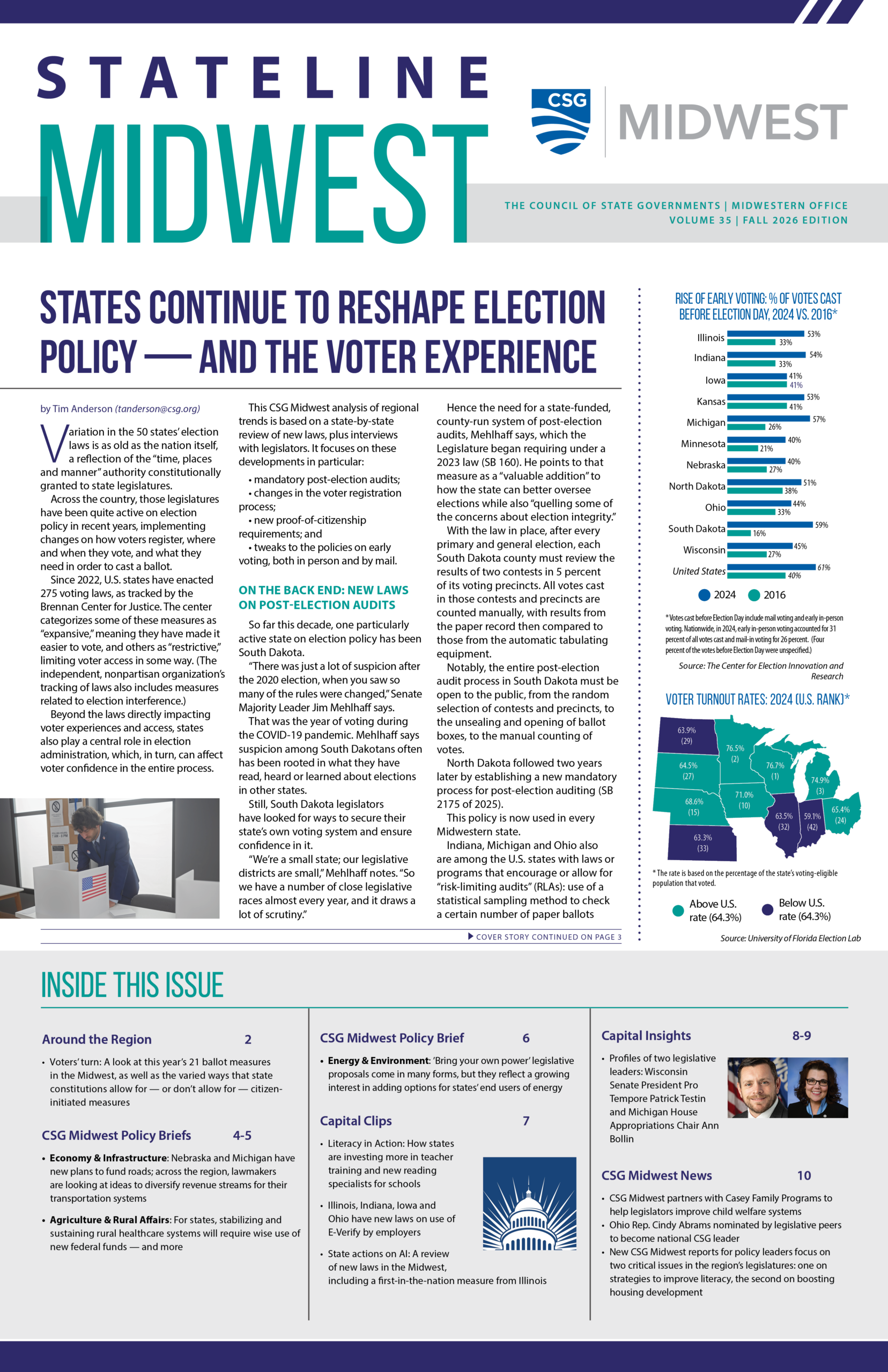 Variation in the 50 states’ election laws is as old as the nation itself, a reflection of the “times, places and manner” authority constitutionally granted to state legislatures. Legislative activity on election law has been high in recent years, and with the 2026 election season now here, CSG Midwest has produced a new analysis highlighting notable developments across four areas:
- requirements for the use of post-election audits;
- changes in state voter registration systems;
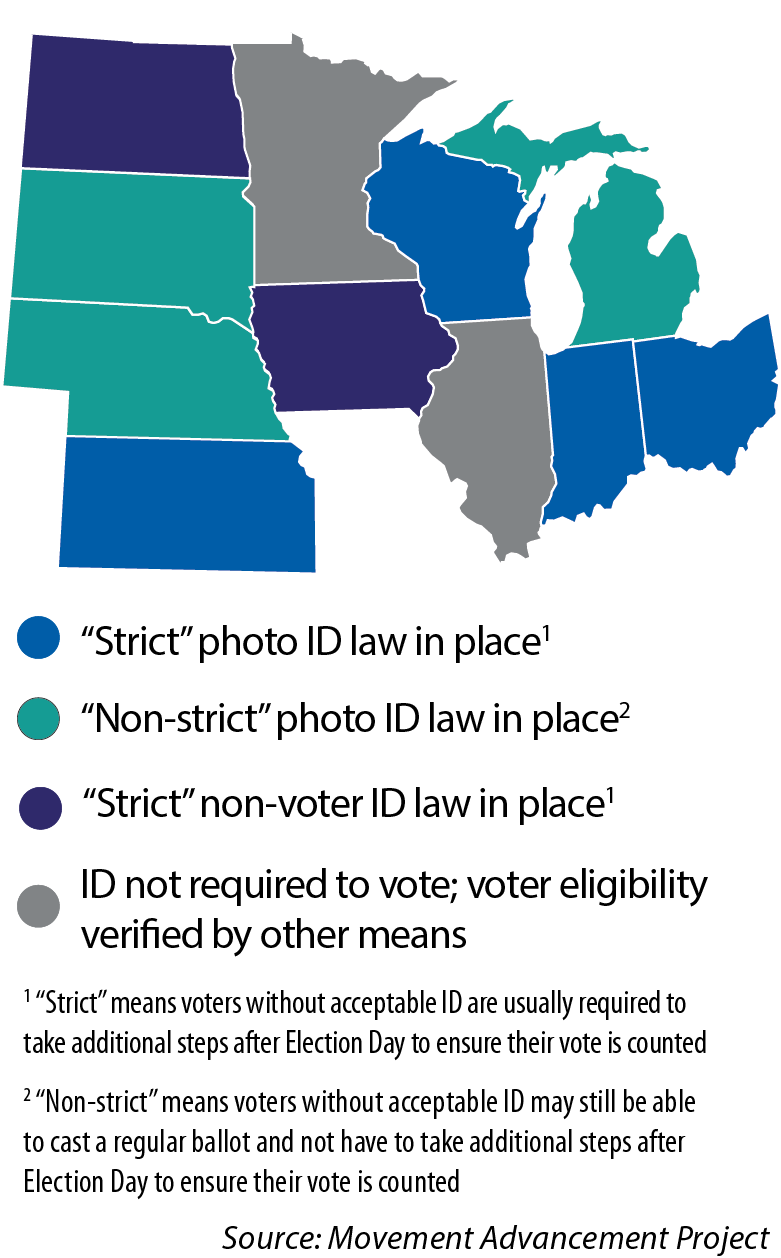
- rules on voter ID and proof of citizenship; and
- alterations to the early voting process.
This cover article for the fall 2026 edition of Stateline Midwest also is accompanied by a review of the ballot measures being decided on by voters this November. For example: Free school meals for all in North Dakota? A stricter threshold for raising taxes in Iowa? Changes to the bail system in Indiana? Changes to legislative term limits in Nebraska? Preventing government closures of places of worship during states of emergency in Wisconsin?
Read the cover article and CSG Midwest review of ballot measures
Overview of Voting & Select Election Laws in 11-State Midwest
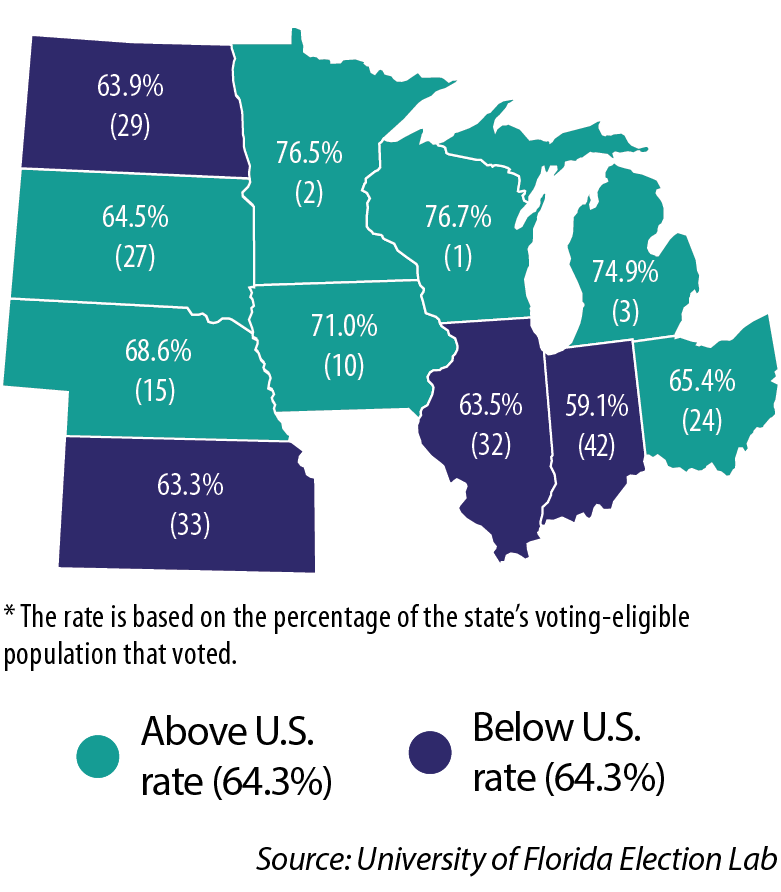
Voter turnout rates and U.S. rank (2024 general election)*
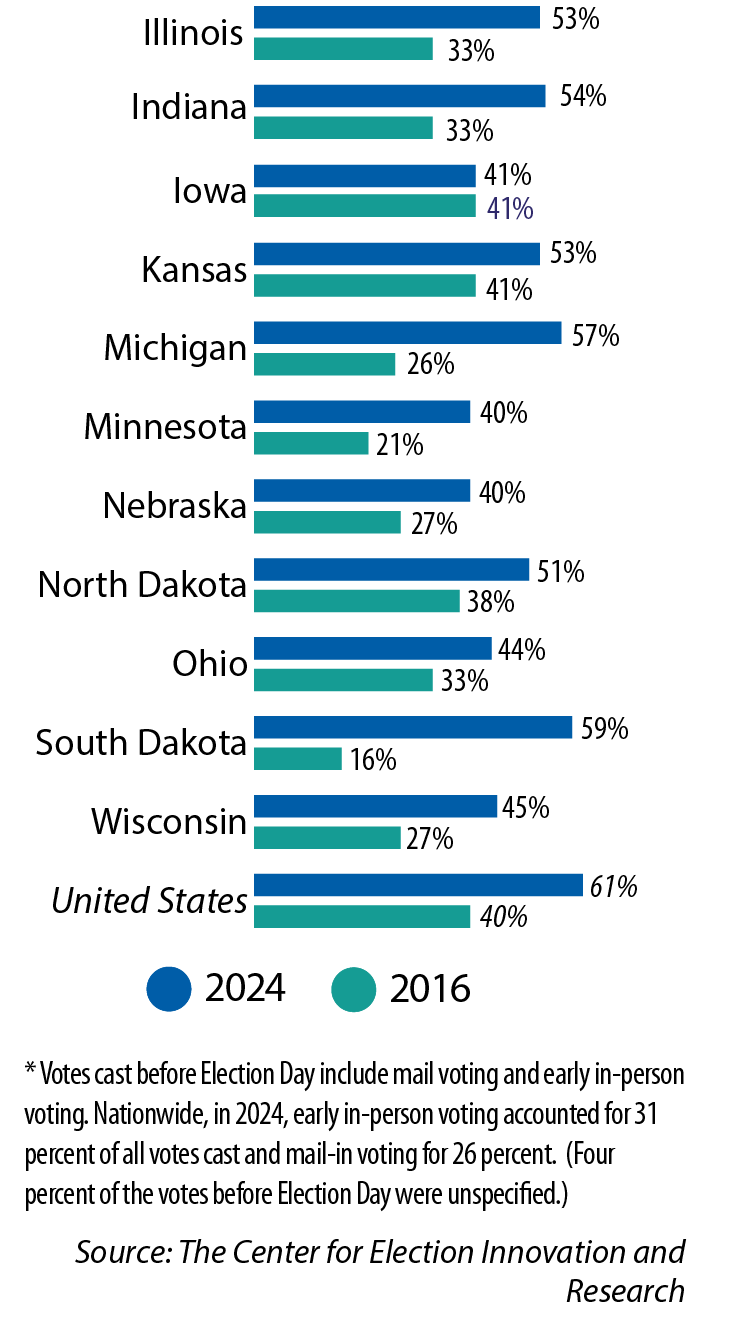
Rise of early voting: % of votes cast before Election Day, 2024 vs. 2016*
State election laws on voter ID at the polls
Overview of select voter registration laws in Midwest
No voter registration required? | North Dakota (only state in nation) |
Allow for online voter registration? | Every Midwestern state except South Dakota |
Allow pre-registration of 16- and 17-year-olds? | Illinois, Iowa (age 17 only), Michigan, Minnesota and North Dakota |
Allow for Election Day registration? | Illinois, Iowa, Michigan, Minnesota and Wisconsin |
Some form of automatic voter registration? | Illinois, Michigan and Minnesota |
Proof-of-citizenship requirement? | South Dakota |
Source: Movement Advancement Project | |
What types of measures can get on the ballot? 11-state overview (from Ballotpedia)
Illinois | Indiana | Iowa | Kansas | Michigan | Minnesota | Nebraska | North Dakota | Ohio | South Dakota | Wisconsin | |
Allow for legislatively referred constitutitional amendment? | Yes | Yes | Yes | Yes | Yes | Yes | Yes | Yes | Yes | Yes | Yes |
Allow for citizen-initiated state statutes and constitutional amendments? | Limited to legislative article of Constitution | No | No | No | Yes | No | Yes | Yes | Yes | Yes | No |
Allow for citizen-initiated measures to veto an enacted law? | No | No | No | No | Yes (also allows for citizen-initiated measures amending an existing statute) | No | Yes | Yes | Yes (also allows for citizen-initiated measures amending an existing statute) | No | Yes |
Require recurring ballot questions on whether to hold a state constitutional convention? | Yes, every 20 years | No | Yes, every 10 years | No | Yes, every 16 years | No | No | No | Yes, every 20 years | No | No |
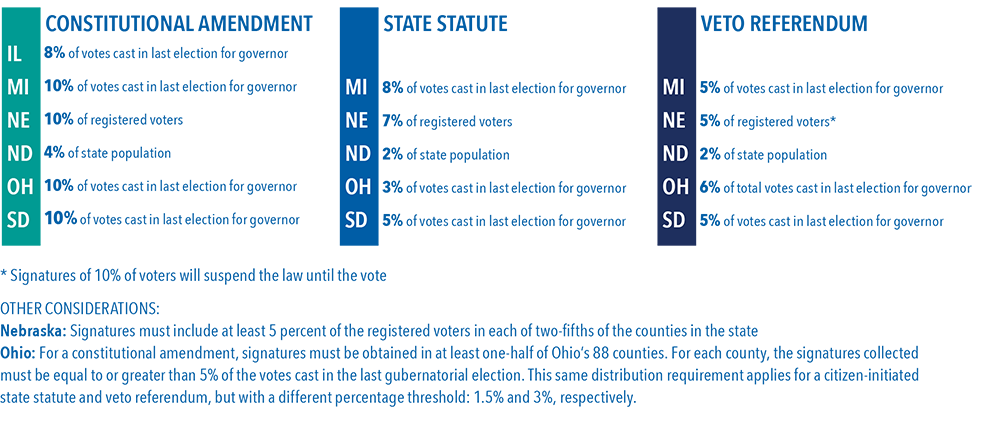
Ballot thresholds: Signature requirements for three types of citizen-initiated measures